
 Marine Fish Tank Ultimate Setup Guide “Fowlr” Fish only with live rock
4. Reef Tank Algae Cleanup Crews
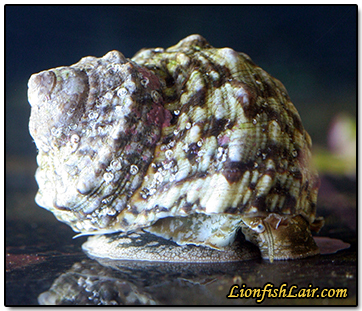
Cleanup Crew. Tank Janitors. Tank Cleaners. Functionally, it means the same thing to every hobbyist…. inverts added to your tank to keep it nice and sparkly.
It’s a necessity (Well, not an absolute necessity)
Everyone has one.
But, if you ask those people what critters to include, and how many…. you’ll get many MANY different answers.
So, Great!~ Renee is going to tell you exactly how to stock your tank. Naw! You knew it wasn’t going to be that easy. I hope to give you some things to think about and even some new information for some, to assist you when selecting your animals.
Grab your hip waders and let’s get some inverts!!
What you stock your tank with will depend on the individual needs of your tank. I know…… sketchy answer. But here’s how I would go about it…….
If you’ve been looking online for a vendor to buy your cleanup crew from, you’ve undoubtedly run across the complete packages many have up for sale. For the most part, they provide too many critters for the listed tank size and some critters are inappropriate to include in a complete janitorial package. Pass these packages by if they state there are no substitutions allowed.
Many of these packages include “algae busters” such as the herbivorous Lawnmower Blenny. No fish should be added for the sole purpose of being a part of the cleanup crew. Any fish should be considered with your fish stocking scheme rather than the cleanup crew stocking list. Other critters that frequently show up in package deals that should be considered on an individual basis and not an incidental inclusion are animals such as:
•   Brittle or Serpent Star
•   Lettuce Nudibranch
•   Sea Cucumbers
•   Sea Hares
•   Crabs, just as the Sally Lightfoot and the Arrow
•   Shrimp, such as the Peppermint or Coral Banded.
Your initial clean up crew should not include any of these inverts. They should be added as needed and researched individually.
So what should you stock your tank with for a basic Clean up Crew? Snails….. and a nice variety of them.
Usually, people add their crew first thing after the cycle and before the fish. How can you even begin to know what your tank will need at this early stage? So, instead of fully stocking your crew, half stock. You want the crew to cover all the different nuisance “algae”. What you don’t want is all the same snails competing for the same food and subsequently starving, while other algae grow unchecked. So mix it up! I put “algae” in quotations, as I am going to throw cyanobacteria into this loosely labeled group.
The Common Crew
These basics are appropriate for most any tank. None require any special care besides maybe daily flipping or returning a little “El Chapo” back to the tank. They are usually affordable and available and pretty hardy, which makes them a great selection for everyone.
Nassarius distortus (Nassarius Snail)
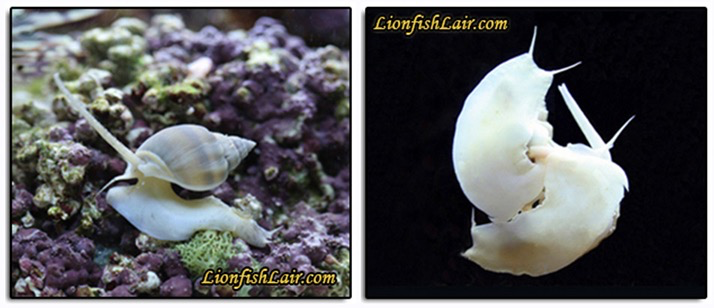
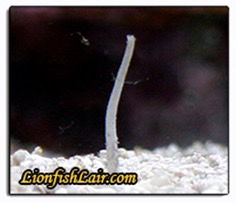
I love Nassarius. They are obligate scavengers on meaty foods….. dropped foods…… dead/dying….. they are with the program. A bare bottom tank won’t cut it with these guys, as they like a nice sandbed. You generally won’t see them until you feed the tank. Then they’ll be popping up from the
substrate like a jack in the box. Other than that, all you’ll see is their siphon above the sand. They won’t do anything for your algae besides reducing the fuel to grow them. In addition, as they clean up the leftovers they have the added benefit of agitating the live sand. After having sung their praises, I really wouldn’t keep more than a couple. They have big appetites and can be quite irritating to your fish if they are hungry. They’ll also strip your sandbed of its awesome critters.
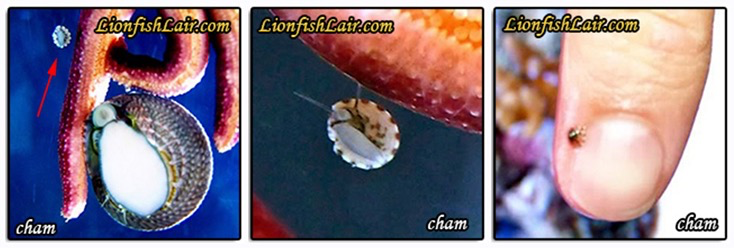
Nerita spp (Nerite Snail)
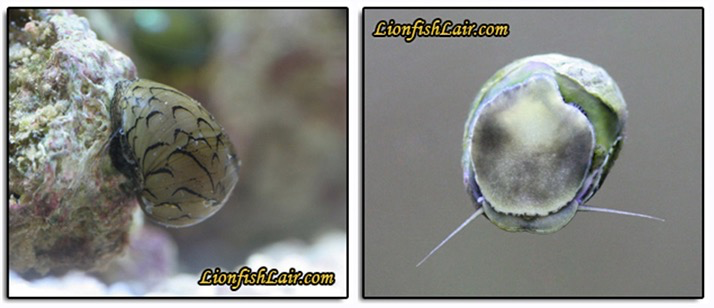
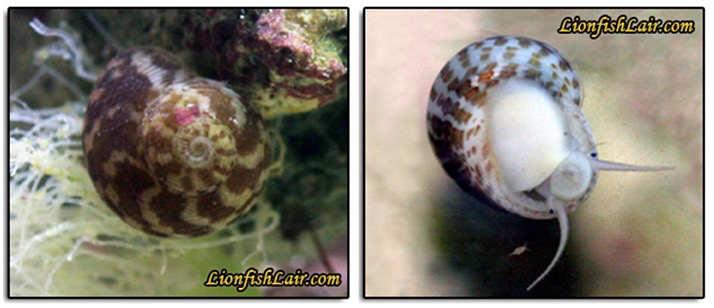
Nerites are wonderful little snails and love film algae, such as diatoms (Helen, 2015). They do a great job on those glass/acrylic panels and some varieties will be seen cleaning the rocks as well. The above pictures show the Pacific variety, while the pictures below show the Caribbean. I have found the Pacific variety are the most desirable of the two. I placed both in my tank at the same time and within a few months, none of the Caribbean were still alive. A couple of years later and I still have all, but one of the Pacifics. Our oldest nerite is 10 years old. Both are intertidal and therefore have no problem “leaving” the tank. I have found the Caribbeans far FAR from the tank, traveling over yards of carpet. I have never had this problem with the smooth variety. Additionally, there are threads on the forums addressing the determination of the rippled variety in abandoning ship.
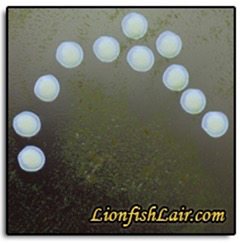
One thing nerites are known for, are their eggs. The bigger the snail the larger the eggs. The Caribbean variety can have capsules like grains of rice! Nerites haven’t been known to breed in our aquariums, so I would remove them from the panel as they appear. They can be difficult to remove after a while and require scraping. I do not find these snails to be desirable because of such, as it can become quite unsightly. There is also a huge size difference, with the Caribbeans becoming much larger than their smooth counterparts.
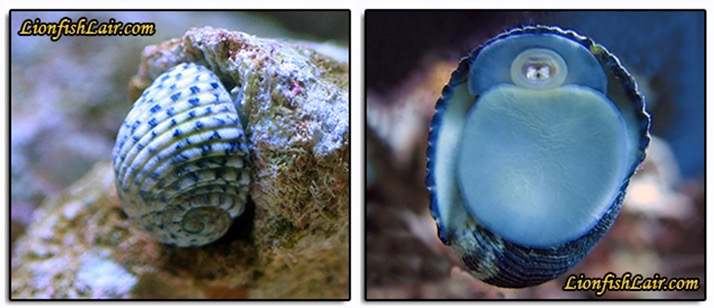
Astraea tecta (Astraea Snail)
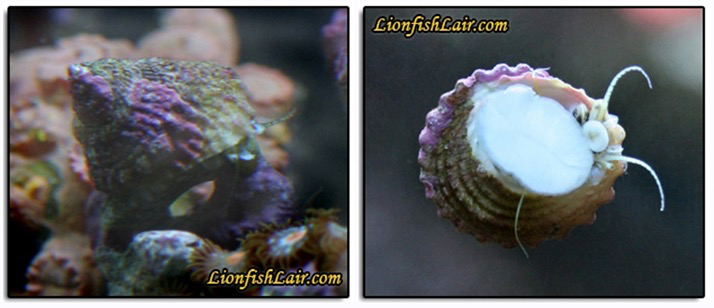
I should start by saying that is not a misplaced “a” you see in my spelling of Astraea. Many people mistakenly drop the “a”, but it is after all only a common name which doesn’t require precise spelling. Astraea are very common and effective. They will eat green and brown film algae and may even pick at hair algae, BUT they require a little maintenance. You have to be willing to go through the daily (and often nightly) “righting” of these snails. They come from an environment where there is little risk of them
being flipped over on their back, so they have not developed the ability to right themselves. I also do NOT recommend them WITH hermits (who I’ll discuss in more depth later). Hermits are meat eaters. It’s just who they are, as none are obligate algae eaters. Add a snail that can’t right themselves and lunch couldn’t be easier. You know your own self….. will you want to add this chore to your daily ritual? If you know you won’t, pass these guys up and choose another. There are lots!
Cerithium spp (Cerith Snail)
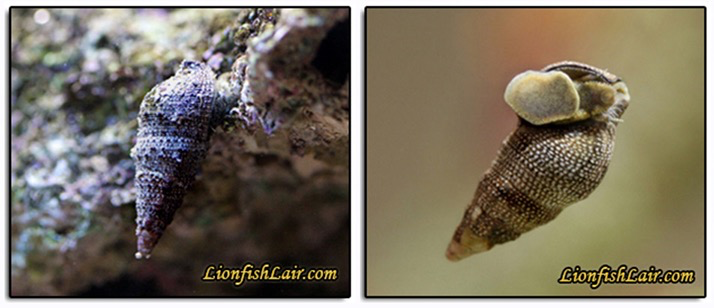
Ceriths will eat film algae and diatoms and it has been said that they will eat cyano. They will graze on detritus but cannot consume filamentous varieties of algae. They can be seen both cleaning panels and cruising over any structure in your tank. They tend to be more active at night and help aerate the substrate when they burrow into the sand. You have to be careful when adding these into an environment with hermits, as the shape of their shell is highly valued by the crabs.
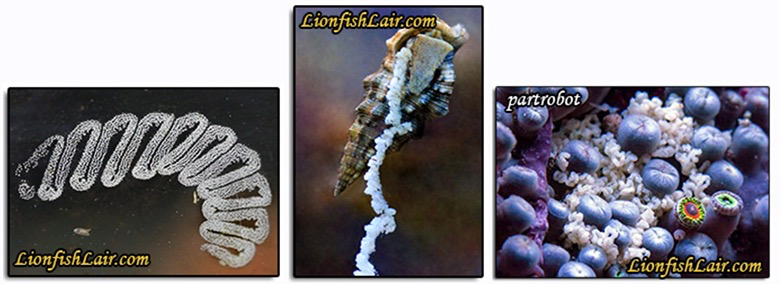
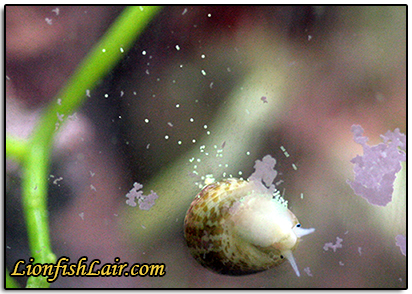
Ceriths are another snail that has visible eggs without actually producing offspring. As can be seen below, they can have a neat pattern on the glass, a messed up version on the glass or a total mess on the rock.
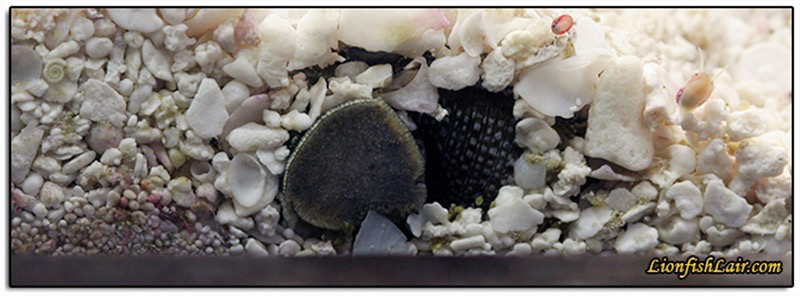
Just because I think ceriths are so ideal, here’s another picture showing they can be found anywhere….. even stirring your sandbed!
Trochus sp (Banded Trochus Snail)
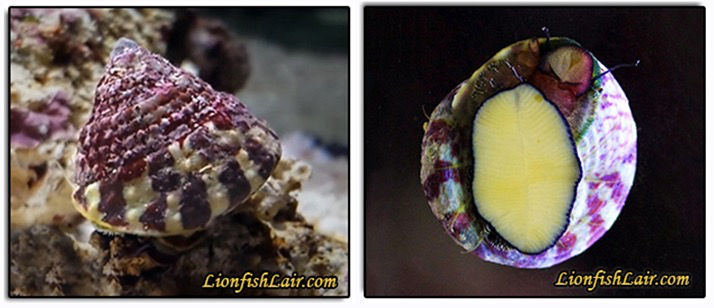
Trochus eat a variety of algae from filamentous to film and has been reported to have a special adoration for diatoms (Amos, 1996). They can be found cleaning any surface in your tank, but frequently will be seen on the glass. They provide a similar function as the large turbo snail without the size, and therefore, are an excellent addition to your basic cleanup crew. They do reproduce within our tanks via a spawning event, and in a couple of months, you may see the juveniles on the glass. The juveniles may be mistaken for Collonista snails, yet upon close inspection, you can see the difference.
Tectus fenestratus (Turban Snail)
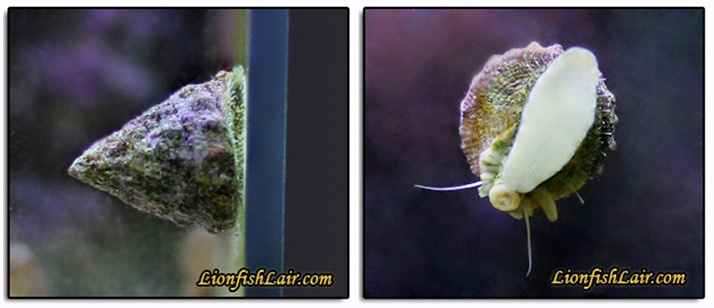
The Tectus snail will clean film algae, diatoms, and cyano from both the live rock and the panels. They are found in holes and crevices in their natural environment, so they have the ability to right themselves. These snails also go through a spawning event without eggs ever appearing in your tank.
Big Things Come in Small Packages
There are a group of smaller snails available from Florida collectors that shouldn’t be overlooked. Sometimes it’s the little guys that are the Power Horses. Note their size next to the dime.
Planaxis
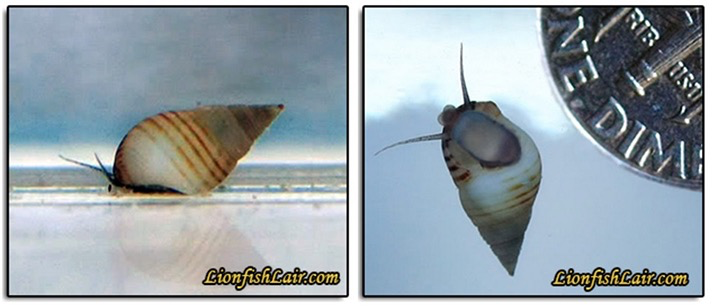
These guys mainly live in shallow water under rocks, until it’s time to forage. That’s when you’ll see them out actively cruising around for micro algae. These are great little herbivores to add to your collection.
Dwarf Cerith
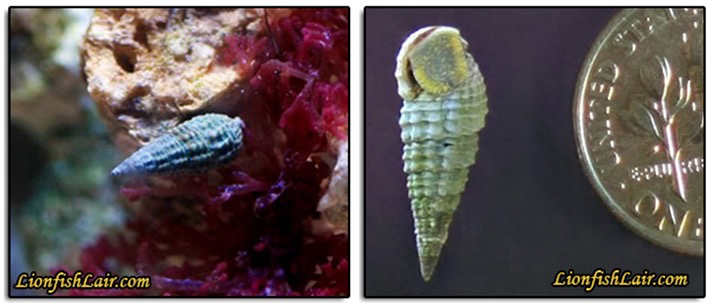
These guys will mainly hang out on your rock and the glass. They are excellent at controlling diatoms, cyano, film algae and detritus.
Nassarius vibex
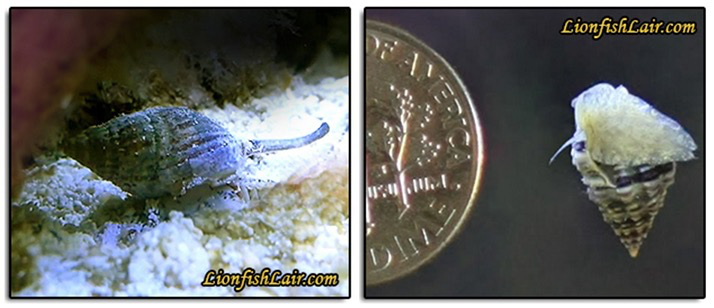
The vibex can be like little sharks when they smell food in the water. Sometimes even the scent of your hand in the water column is enough to peak their interest. These guys are not algae eaters. They are excellent little sand stirrers and clean up carrion. They can also smell when something is about to die and they do not apologize for showing up early for the goodbye party.
The Beasts
I don’t consider any of these a part of a standard clean up crew. Most require a lot of food or are too large for many home aquariums. Some require supplementation with seaweed.
Turbo fluctuosa (Mexican Turbo Snail)
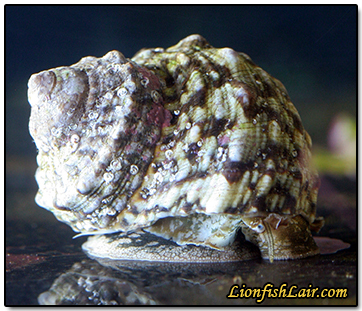
These are one of the smaller of the turbo snails, but make no mistake they indeed belong in the “Beast Category” and require a lot of food. They can indeed help you battle a hair algae outbreak, but remember to consider what happens once the algae have cleared. It’s smaller size is deceiving, and they have earned their nickname “The Bulldozer”.
Megastraea undosa (Top Crown Snail)
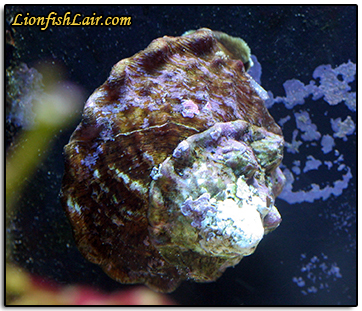
Most people know these snails by the genus Astraea, except this taxonomy label is no longer accepted and Megastraea has taken its place. The trusted database, the World Register of Marine Species confirms this change.Their size has earned them a spot in this group and it’s been reported they grow upwards of 6″. Keep in mind one place they are collected is in the waters around California. That puts it in the “prefers colder water” category. These snails are used in the food industry as an abalone-type substitution. They have been observed eating coralline off the rock in the ocean, so consider that if you have coralline you’re trying to preserve. They are a herbivorous generalist and eat microalgae and diatoms in addition to more filamentous algae.
Turbo sp (Zebra Turbo Snail)
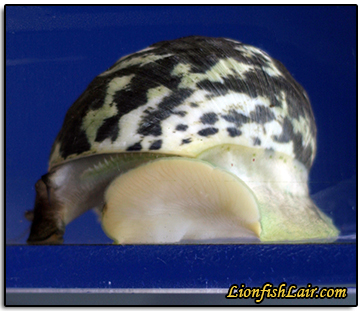
These can grow to a massive MASSIVE size. When they are young and small, they are perfect for combating hair algae. If there was one snail only that could carry the name Bulldozer, this would be it. Maybe make arrangements with your LFS to trade in the snail when it gets too large, so you can start over with a smaller model. I would pick one of the others that are more appropriately sized, if given the choice.
Strombus sp (Queen Conch)
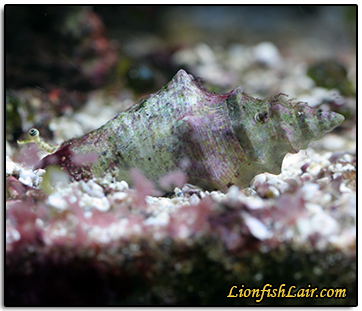
The Strombus is the court jester when considering entertainment value, as their antics make for an interesting show. They are fabulous at consuming filamentous algae. That sounds awesome, except for one issue….. their adult size. These guys can get upward of 12″ and can take down everything in its path with its clumsiness.
Strombus sp (Fighting Conch)
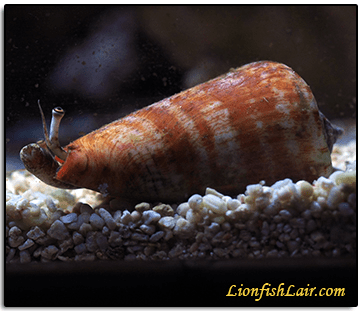
This strombus is a much more appropriate tankmate. They max out at about 4″ and are a peaceful snail, except may show some aggression towards other males. As mentioned, the Big Boys require lots of food, so supplementation may be required.
Hitchhiker CUC
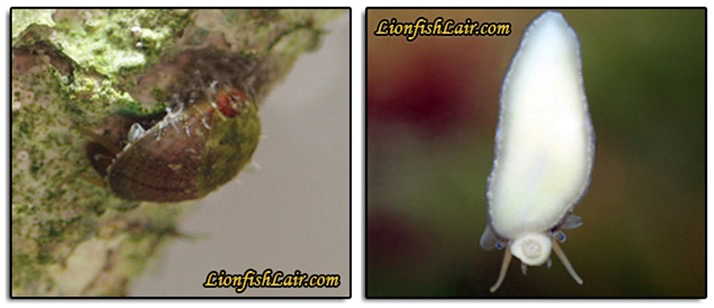
Stomatellas are great, but are traditionally found as hitchhikers and not for sale. Ask a friend to share and keep an eyeball out at the LFS. If you see them cruising around their tanks, ask if you can have some. You do not have to worry about them successfully breeding in captivity because they WILL multiple… ALOT. Just a few and you’ll have much more. The snails will climb to a high point in the tank (usually) and simultaneously release their eggs and sperm into the water. You will not see their eggs.
Collonista spp (Collonista Snail)
Collonista snails are awesome. If you see a few in the daytime, peak into the tank in the middle of the night or at sunrise….. you’ll see those few have quite an extended family. There have been a couple (literally) threads I found on the forums, saying they were a problem for equipment, but generally everyone loves these guys. Again, ask a friend to give you a starter culture of about 5 to get your population going. And always remember to share with someone else who may be needing a starter culture once you get yours going. Pay it forward. You will not see the eggs of these guys, but you will see them spawning.
Columbellidae (Columbellid Snail)
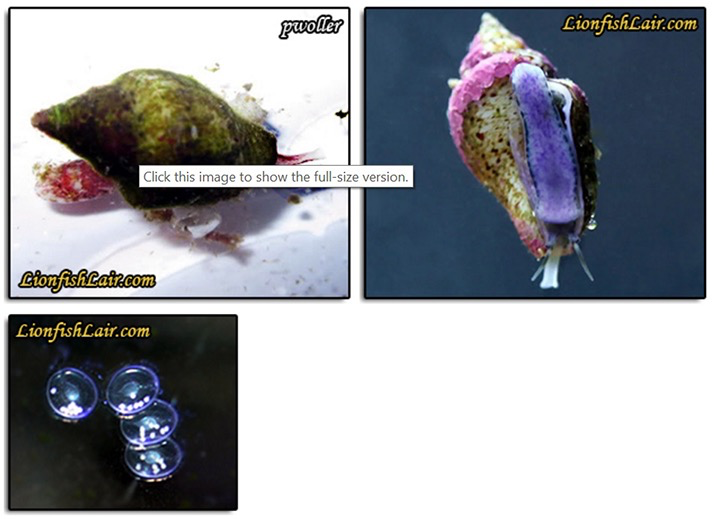
I remember when they busted onto the scene as nano conchs. These became very desirable and for a while was being afforded a large price tag…. well, large for a hitchhiking nano-sized snail. Probably the best part were the eggs. Not only were there eggs, which is cool, but those eggs produced viable offspring.
Snails to Avoid
Engina mendicaria (Bumblebee Snail)
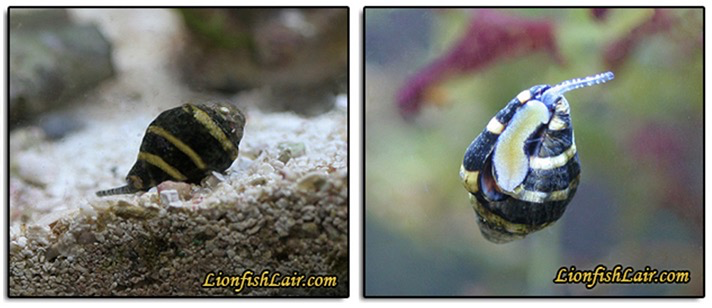
Avoid a large population of Bumble Bee Snails. They are whelks and are predatory on other small snails and worms. One or two in a tank are OK for decorative purposes, but remember if you see them moving up the glass, they are not grazing on the nasty algae…. they are looking for meat.
Margarites pupillus (Margarita Snail)
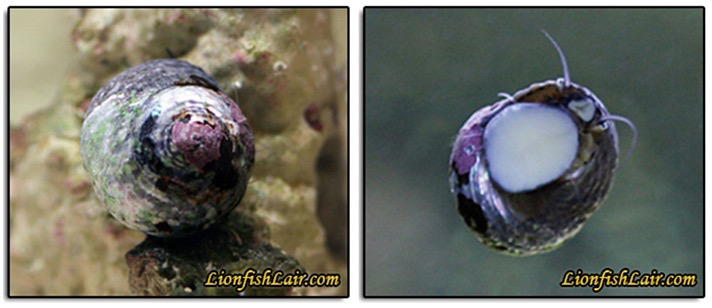
Another snail to avoid is one commonly present in online cleaner packages and at the LFS, is the Margarita Snail. These critters are from cold water areas and will slowly die in your tank over weeks to months. It doesn’t make a difference how they justify it or if they say there are some are from warmer waters (and of course it’s those they’re trying to sell you), they aren’t. They simply aren’t. So, it’s up to you if you want to place a cold water animal in your warm tank. They do not reproduce in our tanks and they do not lay visible eggs.
Babylonia sp (Fancy Nassarius)
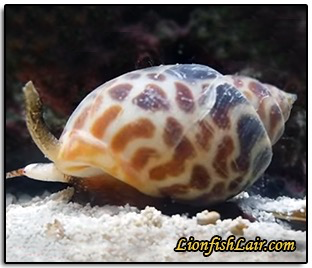
Fancy Nassarius, Leopard Nassarius, Speckled Nassarius, no matter which way you say it, it all says the same thing, you’re being mislead. I’m not saying this is always done intentionally, but either way, such as it is. This is a Babylonia sp and they don’t even share the same superfamily! These are predators and they’re wanting to eat the stuff in your tank you paid money for!!! They will eat other snails, when given time.
Haliotis spp (Abalone)
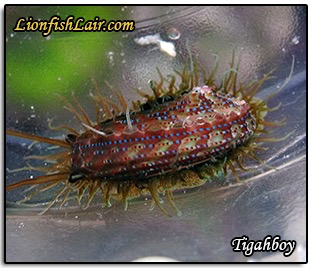
Yes, it’s a snail. Not your average looking snail, but a snail none the less. This beauty lands itself in the “don’t buy” section because it really prefers cooler temps than is found in our tanks. Its beauty will mostly be out of view as it’s a nocturnal critter and is a master at hiding in crevices.
Pests of Snails
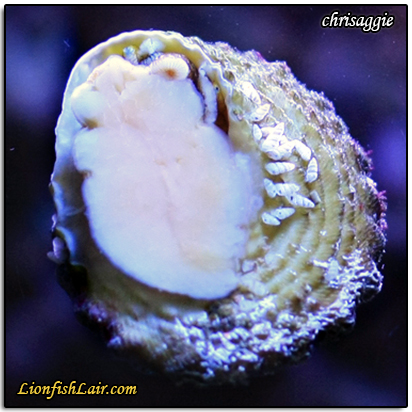
Pyramidellidae (Pyramid Snail)
Pyramid snails are not just for clams. I’m sure you have heard it rumored that if you see them on your snails, that variety won’t bother your clams and vice versa. This is one of the rumors that have turned into a fact on the forums, but it simply isn’t true. None of the snails in different studies chose to starve when there was another food item in the tank. They have preferences and will stay on that food item until it is 100% consumed, but then they would move on to another item and so on.
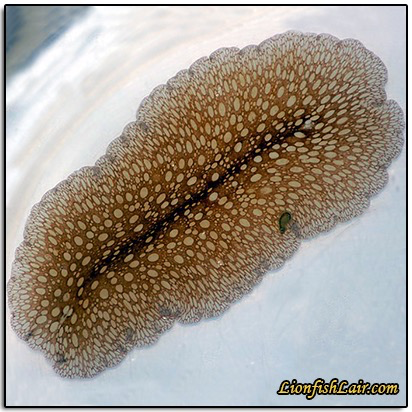
Polycladida (Polyclad Flatworm)
These flatworms cause as much havoc as the pyrams above. They too eat molluscs, which includes our ornamental clams and hard working snails. They are hard to remove as they can fall apart creating many more flatworms to grow and hunt.
Hermit Crabs
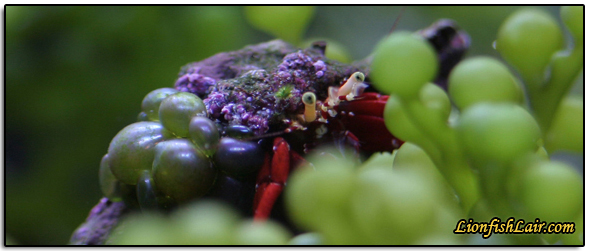
In my opinion, there is no such thing as a reef safe hermit. There are safer choices, but none are to be trusted. With the right variety of snails, you will never need a hermit. How can you trust anything that lives in a cerith, astraea or trochus shell? They are omnivores. That’s not just potatoes folks, that’s meat and potatoes. I know they are listed as herbivores on many sites… I don’t know what to say besides these sites are mistaken.
So, let’s talk about reef-safer hermits.
Scarlet Hermit (Paguristes cadenanti)
This hermit is frequently seen for sale and tends to be a little more expensive. They eat all kinds of algae, but remember he is an omnivore.
Left-handed Hermit (Calcinus laerimanus)
They are often referred to as Micro Hermits, Hawaiian Reef Crabs or the Dwarf Zebra Hermit. They don’t grow as large as the others, making them a safer choice.
Blue-legged Hermit (Clibanarius tricolor)
They really like the greens, but have been known to steal an astraea shell or two.
Buy only what you need and what is appropriate for your tank. They are only one part of solving an algae problem and are more for maintenance than a band-aid to a problem.
References:
Amos MJ. Management policy for the trochus fishery in the Pacific. In: Lee CL, Lynch PW, editors. Trochus: Status, Hatchery Practice and Nutrition; 6–7 June 1996; Northern Territory University. Canberra: ACIAR Proceedings; 1997. p. 164–9.
Heller, Joseph. (2015). Sea Snails: A Natural History. Cham, Switzerland: Springer.
There are a group of smaller snails available from Florida collectors that shouldn’t be overlooked. Sometimes it’s the little guys that are the Power Horses. Note their size next to the dime.
4. Ultimate Nano Reef Tank Setup Guide
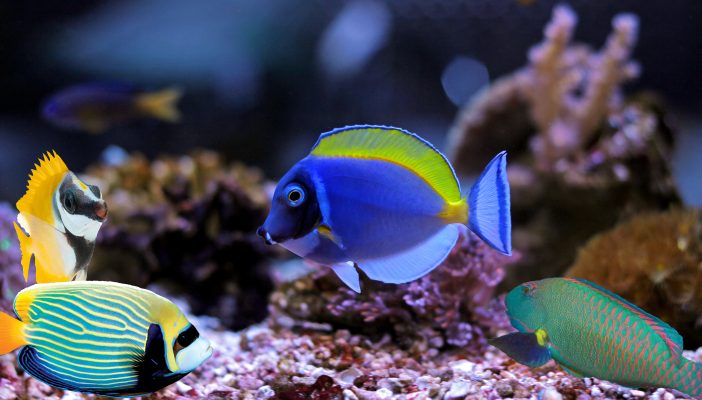
The following Nano Reef Aquarium Setup Guide and product selections will help you successfully create a nano reef aquarium up to 29 gallons. This lists the recommend best equipment for a successful outcome. When considering a saltwater aquarium, always remember the price of added filtration will easily pay for itself in fewer fish losses and less labor to keep the aquarium clean. In some cases, the recommendations include a second or third option. Since every aquarium is placed in a unique location and physical space limitations may be a factor, other viable choices appear for specific purposes where applicable. These type of aquariums are also suitable for invertebrates that do not have high light requirements as long as they are compatible with the fish chosen.
Aquarium Selection
Lighting

Stand or Cabinet
Make sure the cabinet is properly constructed for handling up to 10lbs per gallon of water. If something other than an aquarium stand is used, it should be able to support the weight and hold the entire rim of the aquarium bottom level with no spaces between the aquarium and the support. Plywood or solid wood construction is preferred to press or chip board materials. They will last longer and not swell from the humidity from sumps or cleaning the aquarium.
Filtration and Flow
Sumps and Built-in Filtration (Best)
The best types of filtration for tanks of this type are sump-style or built-in type filters, such as those available on the Madeira 43 Gallon aquarium by Hydra Aquatics. Built-in back filters and sumps accommodate a large amount of aquaLife Biomatrix biological media, provide surface skimming, better aeration, as well as mechanical, sponge, and chemical filter capacity. Red Sea also makes all inclusive tanks in this range that include cabinets.
Sumps, such as those by Eshopps, expand the overall capacity of the system, accommodate even more aquaLife Biomatrix, refugiums, protein skimmers, and other forms of add-on filtration reactors.
Tanks must be drilled or have overflows built into them to use sump-style filters. Kits for drilling tanks are available. They are called “ghost overflows.” Prodigy is the best version Eshopps has and Eclipse is the “good” model. These overflows come with a drill bit and template to drill the holes along with the overflow assembly. Make sure the tank is not made from tempered glass. Tempered glass cannot be drilled. All of the Hydra Aquatics, Mr Aqua, and UP Aqua tanks can be drilled.
If drilling an aquarium is not for you or not possible, Eshopps has siphon boxes or overflow boxes that work with sumps that do not require drilling the aquarium. Drilled aquariums are preferred for the ultimate system.
Return Pump
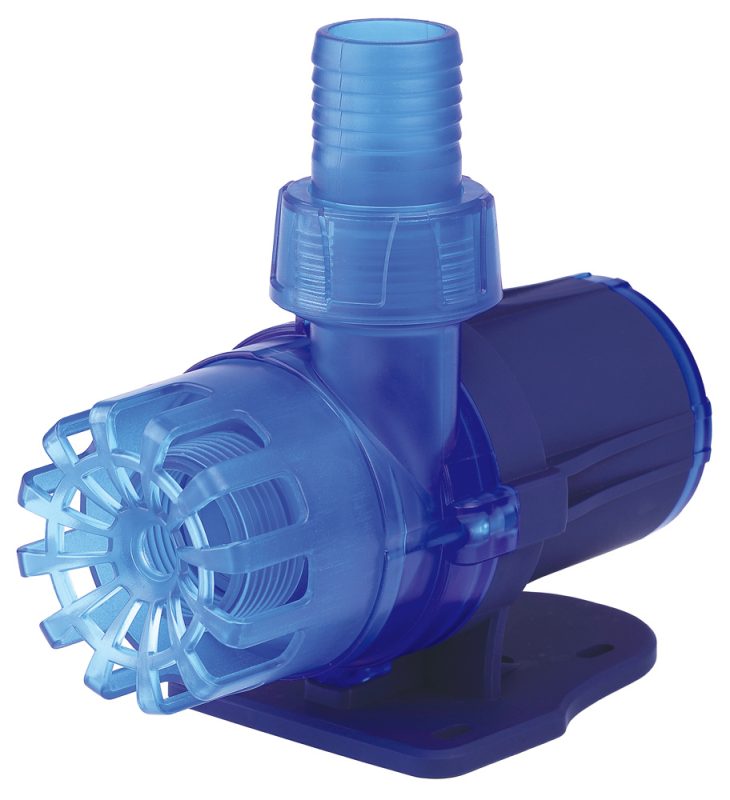
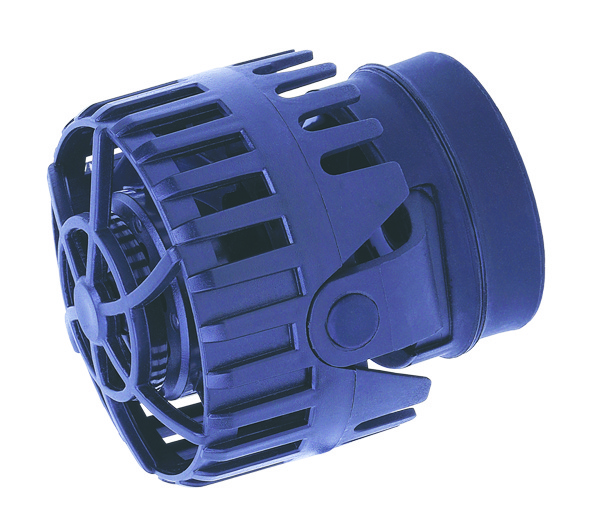
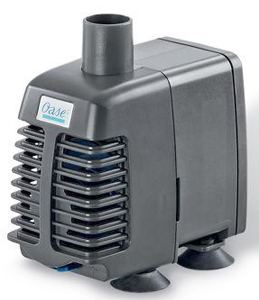
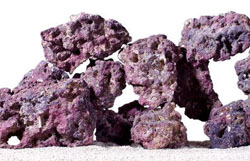
Remember, every sump needs a pump to return the water to the aquarium. Buy the best pump possible to ensure reliable operation. The Platinum Blue by ZK is the quietest pump for this application, while Sicce and Oase offer good alternatives, as well. Purchase one that is 5 times the tank size in flow rate. Use the pump along with powerheads, aka wave or stream pumps, and CaribSea Live Rock, which is seeded live rock with any pests. The rock becomes part of the biological filter and creates an active reef environment for the aquarium.
Protein Skimmers
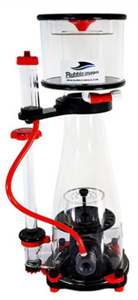
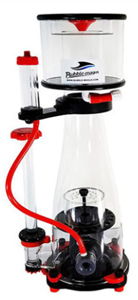
Protein skimmers should be included on an Ultimate Setup fish-only system. Protein skimmers add aeration and remove waste before it breaks down to increase nitrate loads and cause algae problems. A wide range of models is available, but the Elite Skimmers are the best considerations. The AquaVitro Division Skimmers offer high drain protein skimmers with adjustable components making them adaptable to many sump configurations. High drain skimmers are not affected by sump water height or evaporation. These are available by phone orders or in our facility only. The manufacturer does not allow on-line sales.
UV Sterilizers
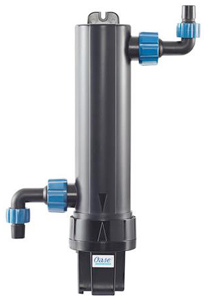
The second of the two options for the “ultimate system” is a Ultraviolet Sterilizer. These units kill unwanted bacteria and parasitic pathogens thus reducing the chances of disease outbreaks or spreads. UVs also help with water clarity and kill some types of algae. No store central filtration systems go without them and that speaks for itself. Like protein skimmers, UV’s can be added at any time. Oase Clear Tronic model is compact and well designed. The Lifegard UV Pro-Max is a true commercial level UV that is excellent as well.
Pellet Reactors and Media Reactors
Pellet Reactor
Biopellets have become a popular method of removing nitrates and phosphates from an aquarium. Made primarily of a biodegradable polymer that promotes (“feeds”) aerobic and anaerobic bacteria, biopellets are a viable method to consume undesirable nutrients (NO3 and PO4) within a reactor.
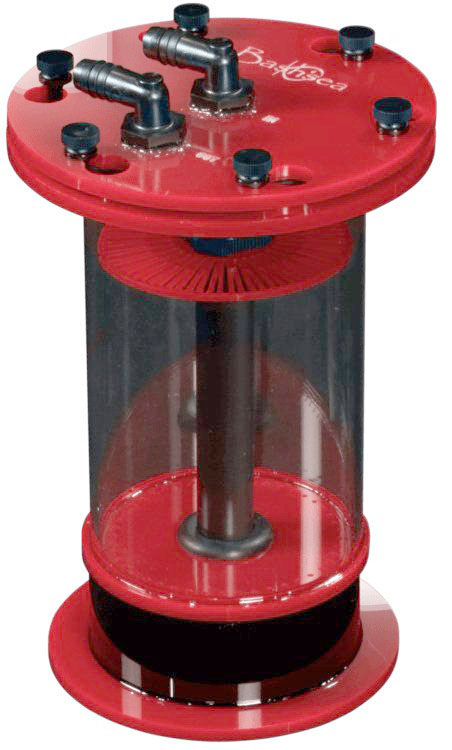
Pro Tip: Only use a pellet reactor if you are using a protein skimmer. Pellet reactors can cause bacteria blooms in heavily loaded systems but this is not an issue when used with UV sterilizers. Protein skimmers also help avoid these blooms. Bashsea makes the best reactors in the industry. Aquavitro M reactors are also great choices.

Media Reactors
Bashsea also makes media reactors that can be added to the sump. Large amounts of carbon and chemical media can be used in them. These reactors are very efficient because they do not allow any water to bi-pass the filter media. Media reactors are the best way to run carbon, phosphate removers and resin media.
Live Rock and Powerheads or Stream Pumps are part of the filtration
Use live rock along with powerheads, aka wave or stream pumps, and CaribSea Live Rock which is seeded live rock without any pests. The rock becomes part of the biological filter and creates an active reef environment for the aquarium. Powerheads, or stream pumps, create flow, gas exchange and current to keep debris from settling and bring oxygen to the pores of the live rock. Choose models from Oase, Sicce or the controllable ZK Platinum Slim Wave models are very nice.
Other Essentials
Refractometers
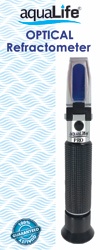
For saltwater enthusiasts with an interest in a more precise and sophisticated instrument to measure salinity, the AquaLife Refractometer with automatic temperature compensation is a consideration. Hydrometers are less expensive alternatives but are far less accurate and must be calibrated by a store with a refractometer.
• Heater
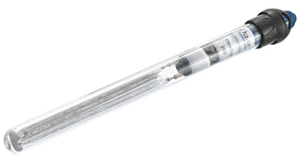
Oase Electronic Heater 100-200 Watt only use a high quality submersible heater. This is one of the best we have tested. The Fluval heater with digital read out is also very nice.
• Synthetic Sea Salt
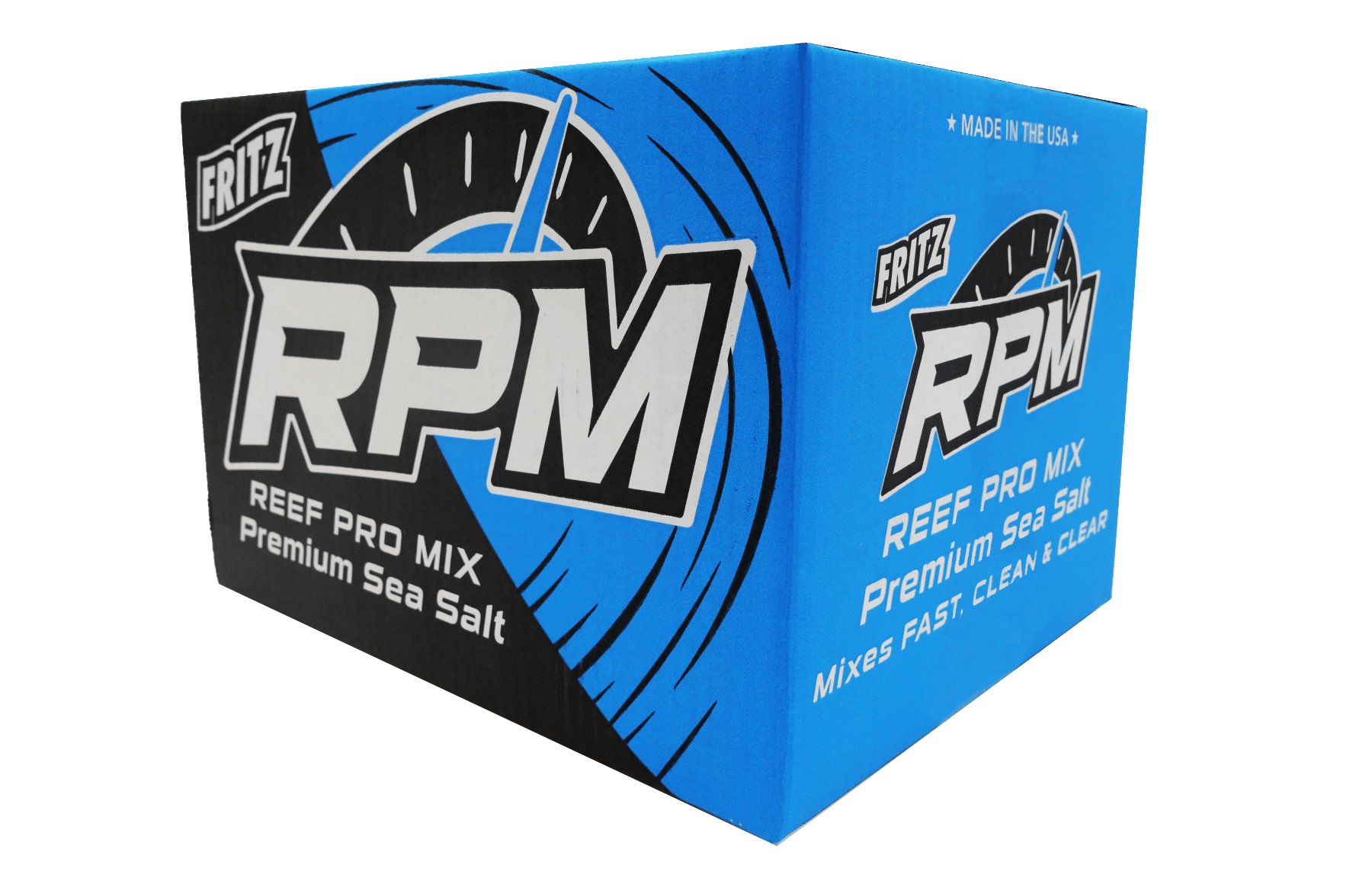
Fritz RPM or Aquavitro Salinity are highly concentrated blends of salt formulated for marine and reef aquariums that contain all essential major, minor, and trace components found in natural sea waters. Plus, RPM has the added advantage of enhanced magnesium levels. There formulations are ideal for the reef environment and provide accurate seawater concentrations of magnesium, calcium, and strontium with proper alkalinity and pH for closed reef aquarium systems. Water can be purchased from our local store pre-mixed with reverse osmosis water and Aquavitro Salinity. We also have 2.5 and 5 gallon containers and R/O freshwater available for purchase. These are the only two salts we use at this time with Aquavitro Salinity getting our top rating and RPM as a runner up. RPM is used by our maintenance crews when they need to mix salt quickly on location as it mixes quickly compared to other brands without sacrificing ingredients.

• Substrate
Choose a CaribSea product. Natural, calcium based substrates are best for saltwater aquariums. A good rule of thumb is 1lb of substrate per gallon of water.
See All Saltwater Substrates
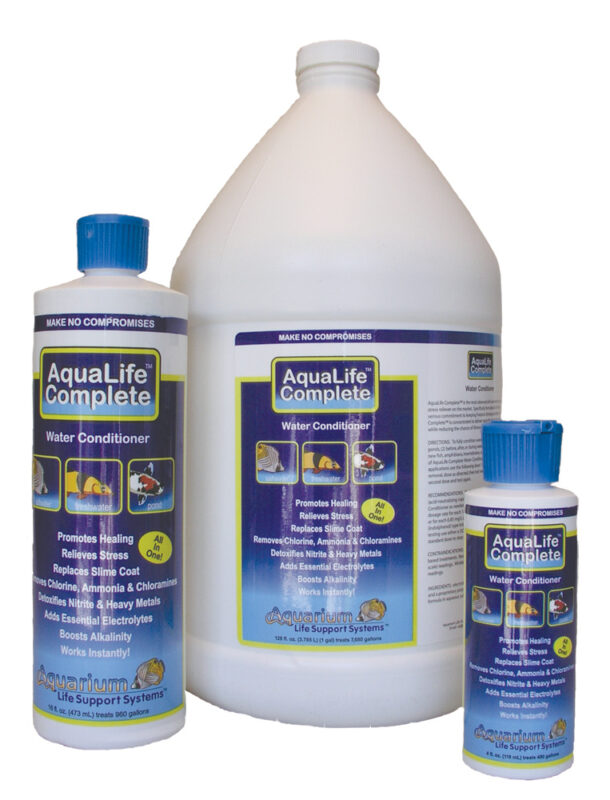
• Dechlorinator or Water Conditioner
Always add a high quality dechlorinator or water conditioner anytime tap water is added to the tank. AquaLife Complete is an excellent product that not only dechlorinates but adds important elements to maintain slime coat integrity and reduce stress. In addition, AquaLife Complete also detoxifies chloramines and ammonia if they are present. This is the best and safest water conditioner on the market. We use hundreds of gallons a year in our facilities.

• Starting Bacteria Culture Cycling
Use aquaLife Activate Saltwater. Seeded biological media is available as well to speed up the cycling process at our local facility. aquaLife Biomatrix is an excellent media for this purpose. aqualife Activate should be used weekly after the cycling process to reduce waste and algae.
The tank can be cycled with hardy livestock or by the fish-less cycling with aquaLife Ammo. See the Video Here.
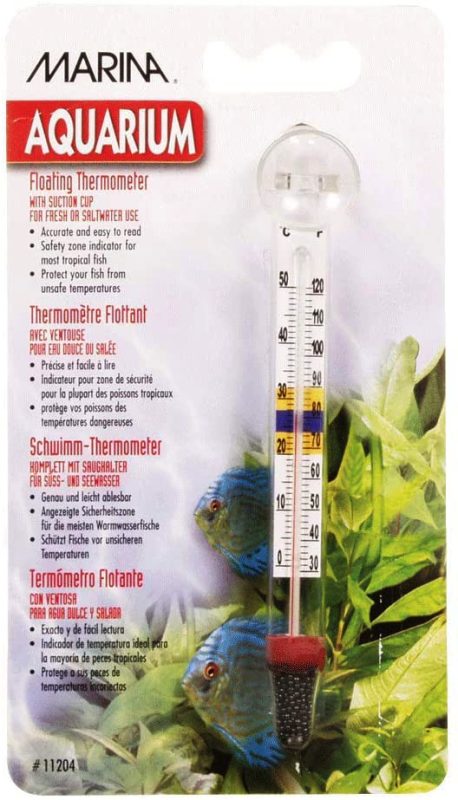
• Thermometer
Hagen Thermometer, Floating You will need a thermometer to check water you are making with synthetic sea salt for water changes and to make sure the tank is at the correct temperature.
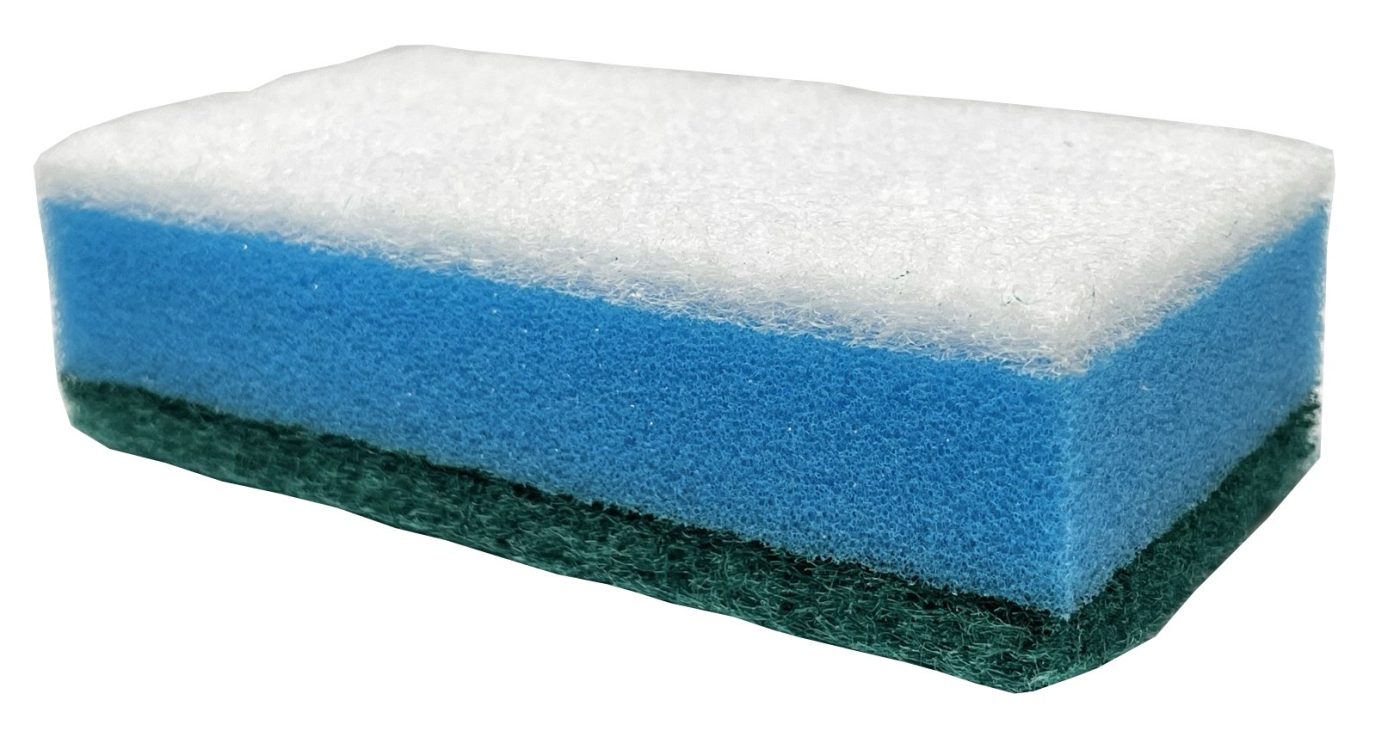
• Algae Scrubber and cleaning tools
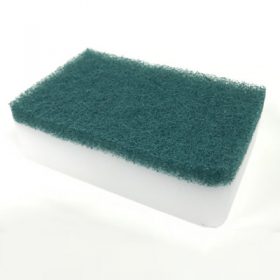
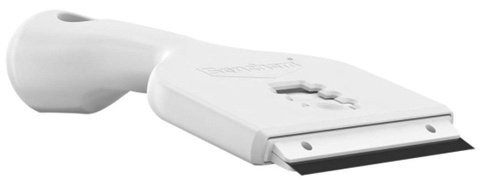
There are many cleaning pads on the market and we use some of all of what we sell. However, we use more of the aquaLife and Hydra Aquatics pads than anything followed by the Seachem 3 in 1 and the Continuum Cleaners.
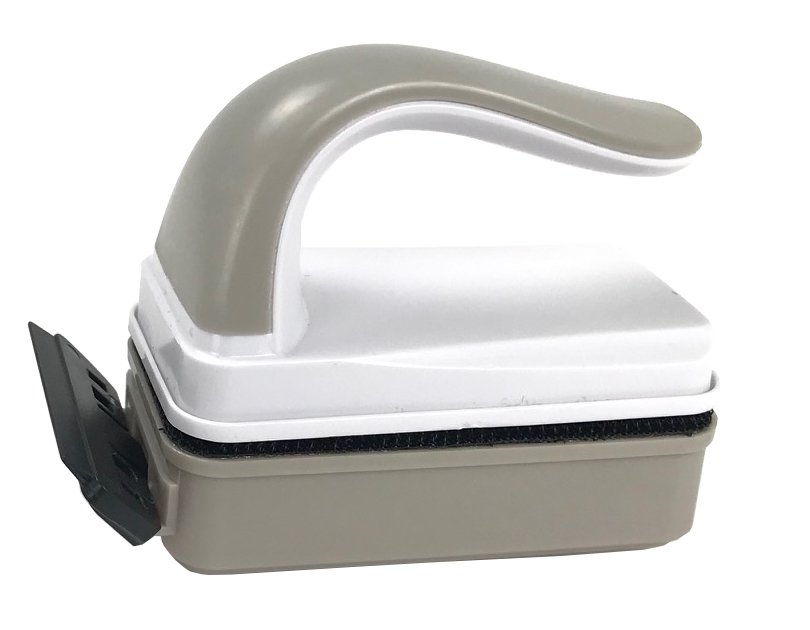
MagFloat 30 or UP Aqua Magnet Cleaners for glass are also great choices for quick cleaning without getting wet.

• Fish Net
Aquatop
Good Habits to Follow
• Water Testing
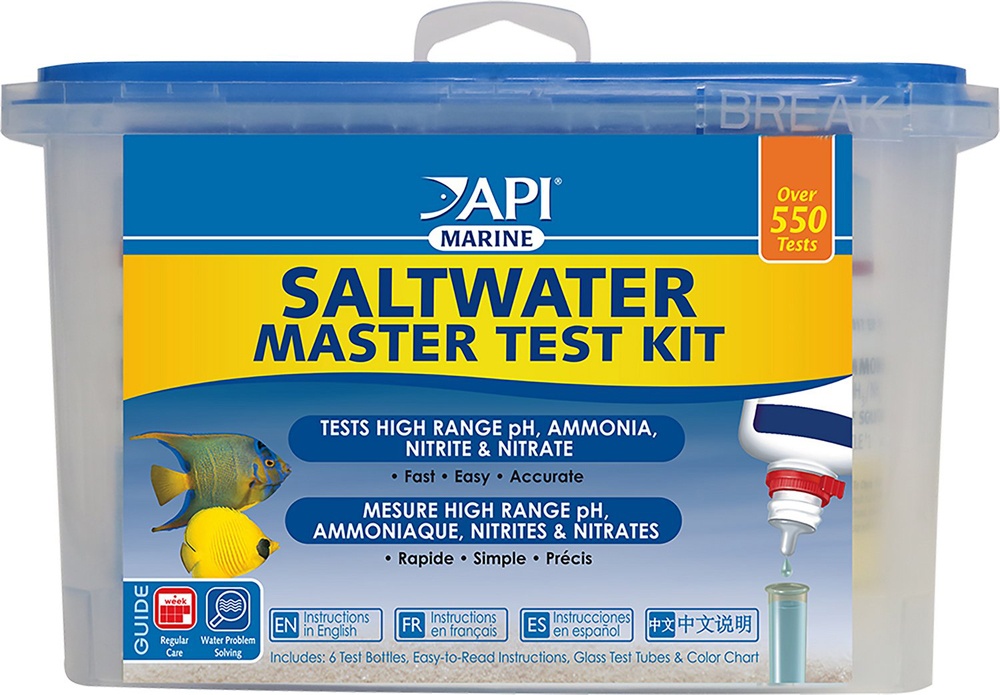
Never underestimate the importance of water testing. Fish trapped in water with even small amounts of ammonia and nitrite can die within hours. Water test on a regular basis and be prepared to act quickly is something goes wrong. A Saltwater Master Test Kit by API contains accurate testing supplies for pH, ammonia and nitrite. The Sera Kits are very accurate and easier to read. If you prefer digital precision use the Hanna Kits.
See All Test Kits
• Fish Food
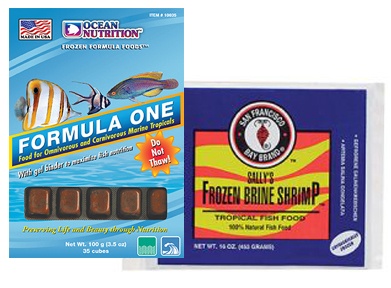
Nutrition is second only to filtration in importance. Saltwater fish should be fed 80% frozen foods since these foods most closely match their natural diet.
See All Frozen Foods
• Do not overfeed the fish. Feed fish only what they will eat in two to three minutes 1-2 times per day. Vary the diet. Different types of frozen foods from Ocean Nutrition and San Francisco Bay with Vita-Chem and HyperGarlic dripped on them combined with occasional feedings of aquaLife CSPro food will ensure the health, longevity and color of your fish. It is important to try and duplicate the foods eaten in the wild. Freeze dried krill, Mysis Shrimp and brine shrimp are also great supplement and delivery systems when soaked in Bio Pro Plus, Vita-Chem and or HyperGarlic.

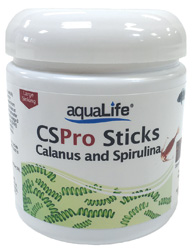
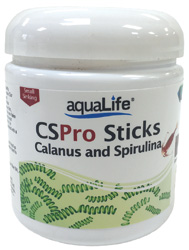
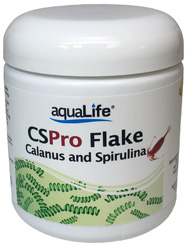
AquaLife CSPro Flake and Stick Foods
Formulated from the best ingredients, and fortified with vitamins and probiotics, CS PRO foods offer a rich source of omega-3 fatty acids [eicosapentaenoic acid (EPA) and docosahexaenoic acid (DHA)] together with astaxanthin, for healthy growth and maximum coloration. Plus, every batch is packed with a triple dose of immune-boosting vitamins.
• All-in-one formulation: complete nutrition, omega-3s, and vitamins
• Great for all fish, both freshwater and saltwater
• Rich in color-enhancing astaxanthin
• Scientifically formulated in line with the latest research
• Highly digestible, all-natural ingredients with NO preservatives
• Will not cloud water
Use quality chemical media to reduce organics and increase water quality
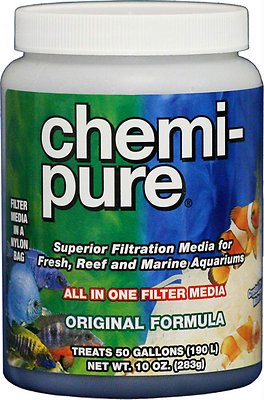
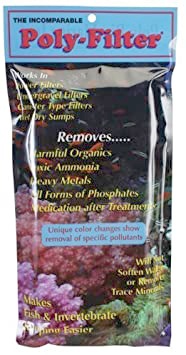
The filters shown above have room for placement of two revolutionary chemical media, Chemi-Pure and Poly Filters – both of these media should be used in a saltwater tank of this size to ensure success. Chemi-Pure Elite is excellent as well if algae is a problem or aquaLife Phosphate remover.
• Do a 25% water change monthly or a 10% water change twice a month. Remember to dechlorinate the water and adjust it to the same temperature as the aquarium water.
• The pH should be 8.2 High quality salt such as Fritz RPM has added buffers and with proper water changes, pH should be stable. Aquavitro Salinity is sold only at local authorized dealers, like our local store. However, if water changes are being done and pH is a problem, use Marine Buffer by SeaChem. Further information is available on water parameters in the Log Sheet section.
Further Reading:
9. Mixing Saltwater
11. Supplements & Additives
12. Understanding the Nitrogen Cycle
4. Understanding the Nitrogen Cycle How To Cycle a Marine Aquarium
Understanding the nitrogen cycle and how to properly cycle and start your aquarium is crucial. Here is everything you need to know.
Every hobbyist setting up a tank or pond for the first time has heard salespeople refer to the ‘nitrogen cycle’ or ‘cycling’ the water. A good understanding of this cycle helps get a tank or pond off to a good, healthy start, and saves money in fish losses and time dealing with the problems that can occur. Knowledge of this important process helps keepers anticipate and troubleshoot problems over the entire life of the tank or pond.
The nitrogen cycle is a naturally occurring process that enables all bodies of water – fresh, salt, or brackish – to sustain animal life over time. It is a dynamic process occurring in all oceans, lakes, streams, ponds, and aquariums worldwide. Unlike animals that live on land and can move away from the wastes they produce, fish and other aquatic life are trapped in the environment with their wastes. Without some kind of process to handle toxic animal waste, all aquatic life would eventually succumb to these poisons. Day in and day out, this beautiful dance of biochemistry sustains all aquatic life on earth.
The nitrogen cycle is the means by which wastes are broken down to less harmful substances. Toxins from accumulated wastes affect a fish’s ability to take oxygen from the water, its ability to convert food to muscle, its ability to ward off disease, and even its ability to swim. The most common and deadly wastes in aquarium water, ammonia and nitrite, originate from the fish themselves, dead animals, and from uneaten food.
How does the Nitrogen Cycle work?

The nitrogen cycle is driven by two species of bacteria, Nitrosomonas and Nitrobacter. These organisms live on the surfaces of rocks, plants, gravel, and sand, and use waste from animals and plants as an energy source. Without these two vital organisms, aquatic creatures would quickly pollute their environment and die. Although the exact nature of the conversions is not completely understood, Nitrosomonas and Nitrobacter appear to work in concert to break down ammonia to its by-product, nitrite, then nitrite to nitrate. Nitrate at low concentrations is fairly harmless.
As fish are introduced into a new tank, they immediately begin to release waste into the water in the form of excrement and body secretions, both of which contain ammonia. Ammonia, in even low concentrations, is very toxic to fish, damaging the gills and inhibiting the flow of oxygen to the fish’s tissues. In a new tank, populations of Nitrosomonas and Nitrobacter have not had time to reach sufficient numbers to completely eliminate high concentrations of ammonia and nitrite.
Nitrosomonas and Nitrobacter grow slowly at first, then have a rapid growth and reproduction phase and eventually level off to numbers needed in the tank to handle the waste of many fish. The numbers of bacteria will eventually be balanced against the amount of waste produced by a given population of fish. Introducing new fish, an outbreak of disease, or an interruption in filtration can disrupt this balance and the bacterial populations will play ‘catch up’ until the balance is restored.
Since the nitrogen cycle begins slowly, fish should be added to the tank or pond slowly. A new system overwhelmed with fish is also overwhelmed with ammonia. Deaths occur when too many fish are producing too much waste and the beneficial bacteria have not reached sufficient levels to handle the load. Select a few hardy, inexpensive fish at first, be patient, feed very carefully, and let the nitrogen cycle get the tank or pond ready for the nicer, more expensive fish. Fish Less Cycling can also be done using AMMO by aquaLife along with Activate. This process can also be sped up by using seeded BioMatrix which is available at our local facility.
Adding Bacterial Cultures
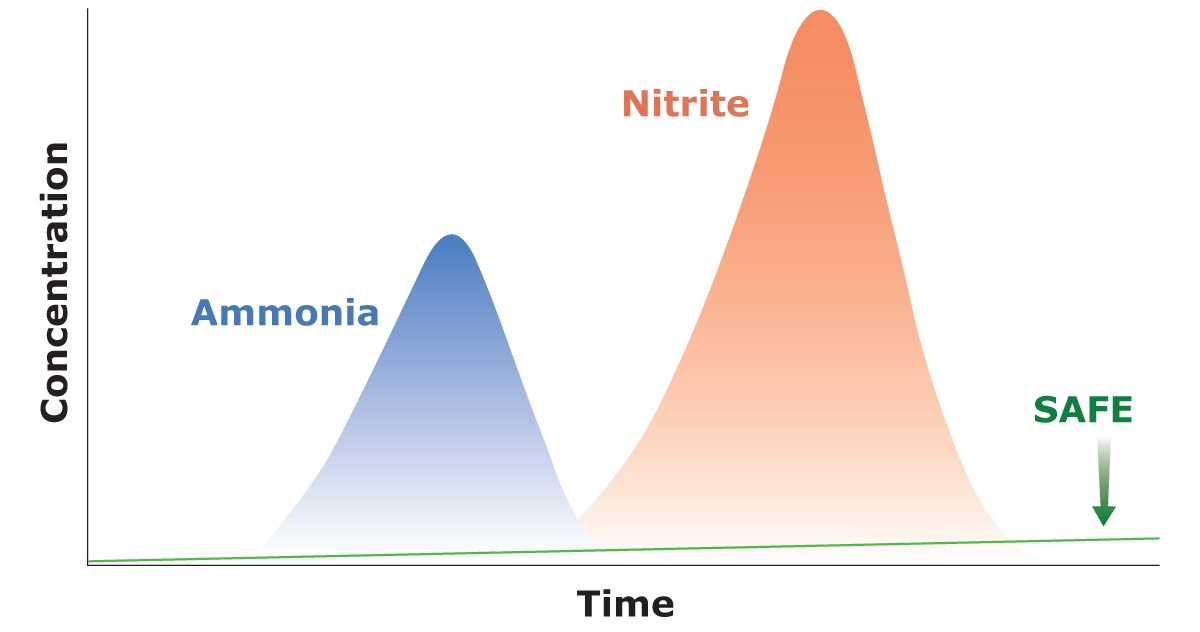
Many commercial bacterial preparations are available to ‘jump start’ the cycle. Cultures introduce huge populations of Nitrosomonas, Nitrobacter, and other cleansing agents to eliminate pollutants and enhance the conversion of ammonia. Some preparations are specifically for freshwater, while others are specific to saltwater systems. Adding cultures to a new system and each time new fish are introduced, or at the first sign of problems, ensures adequate numbers of bacteria to help keep the system free of ammonia and nitrite.
Activate
Filter, filter, filter!
Filtration can determine the success or failure of an aquatic system. Poor filtration leads to stress, disease, and fish loss. Filtration encompasses two main ideas: greater surface area and water movement. The bacteria that break down harmful ammonia and nitrite live on substrate, or surfaces – gravel, rocks, plants, soil, even the fish themselves. Quality filters are designed to incorporate large amounts of ‘media’, or surface, that is folded or compacted into a small space. Media significantly increase surface material to support greater numbers of beneficial bacteria. Nitrosomonas and Nitrobacter require oxygen to break down wastes. Adequate water movement, which physically breaks the surface of the tank or pond, delivers vital oxygen to these bacteria living on the surfaces below the water. Adequately filtered water that passes over the fishes’ gills is ammonia-free and the system is teeming with healthy life.
Choosing a Good Filter
All filters are not created equal. Good filtration provides abundant surface area to support populations of bacteria and a pump that moves enough water to completely recirculate the entire volume of the tank or pond every 3-6 hours. Price is always a factor, so careful consideration should be given to the health of the tank or pond over its entire life to protect from potential losses in fish and other animals. The old adage, an ounce of prevention . . . cannot be stressed enough. A still or inadequately filtered tank or pond is awaiting disaster. Choosing the right filtration system requires good information and good advice. Start at the ‘top-of-the-line’ and work down to the best system you can afford, carefully weighing features against price.
Water Tests
The nitrogen cycle does not begin until fish are introduced to the system. With no food source, Nitrosomonas and Nitrobacter cannot grow and reproduce. Once fish are added, begin testing the water after a week or two. Testing tracks the conversion of ammonia and nitrite as the bacteria perform their duties and helps identify filtration problems even early in the game. Water that reads ammonia and/or nitrite longer than expected in a new system, or consistently reads low levels over time, is an indication of inadequate filtration.
Test frequently in the beginning, or have your water tested by trustworthy salespeople and listen to their advice. When water tests read 0 ammonia and nitrite, the nitrogen cycle is established and the system is stable enough to accept a few new fish. As the system ages, perform regular maintenance and continue to test the water at regular intervals to gauge the status and to identify potential problems. Again, patience and diligence at each stage is a virtue that pays off again and again.
4. Saltwater Quarantine Tank and Treatment
At one time or another, every hobbyist will have problems with disease and measures must be taken to resolve the problems. A small investment in a quarantine tank will quickly pay for itself. Treatment of sick fish in a quarantine tank will require smaller doses of medications and make water changes easier. By isolating fish for treatment, more delicate species are not at risk from exposure to inappropriate medications and the biological filter in the main tank remains intact. Further, quarantine tanks do not limit the types of medications that can be used.
Quarantining all fish bought online is mandatory. We recommend only buying fish from local reputable stores. We quarantine and treat our fish, which we sell locally only, for up to 14 days depending on if it is freshwater, Saltwater and where it comes from. In addition, we only sell and you should only buy fish that are actively eating. Treating fish after shipment and preventing disease is far better than treating fish after they break down or get sick.
Note! With Saltwater water changes are done with prepared synthetic sea salt that can be made or bought from the local store in 5 gallons or 2.5 gallon jugs which is Aquavitro Salinity. Fritz RPM is also a good salt for this application.
Setting Up a Quarantine Tank
The ideal quarantine tank should consist of a 5 to 30 gallon aquarium with a lid or glass top if the fish types being treated are jumpers. A light is not mandatory.

Lights are best left off during treatment but can be used for periodic viewing of fish if needed. This is less stressful to the fish. The size of the tank depends on the size and quantity of fish being treated. Betta fish can be treated in a gallon of water but this would not be advisable for cichlids or larger saltwater fish. Instead of for 5 gallons or larger.
Filtration for a Quarantine Tank
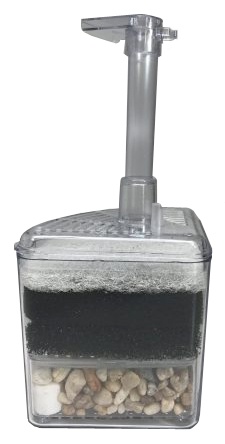
The aquarium should be filtered with air driven filter(s). They should be Hydra Aquatics Sponge Filters along with optional internal filters like those from UP Aqua.
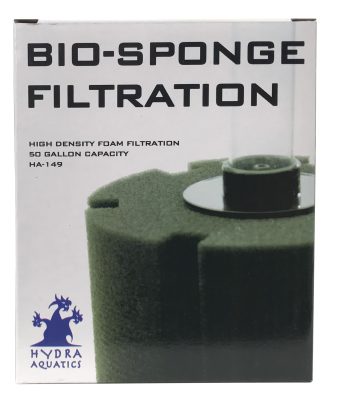
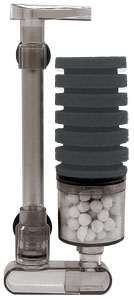
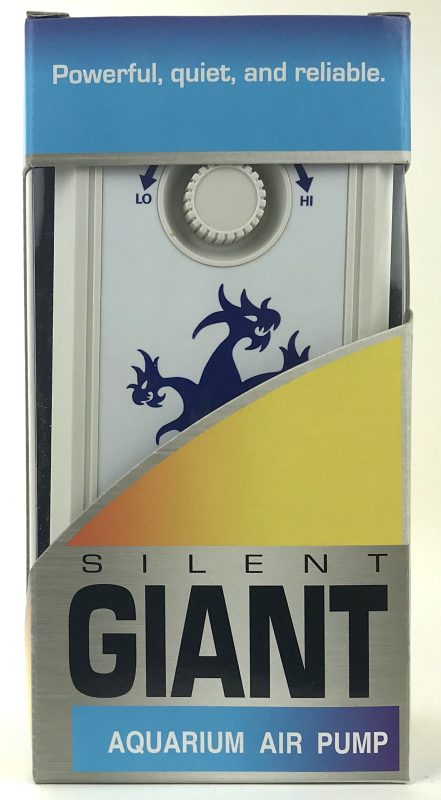
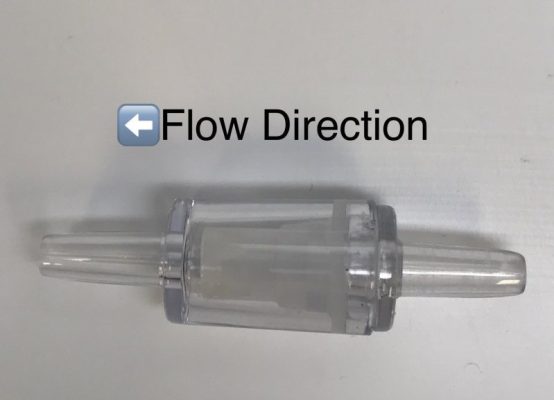
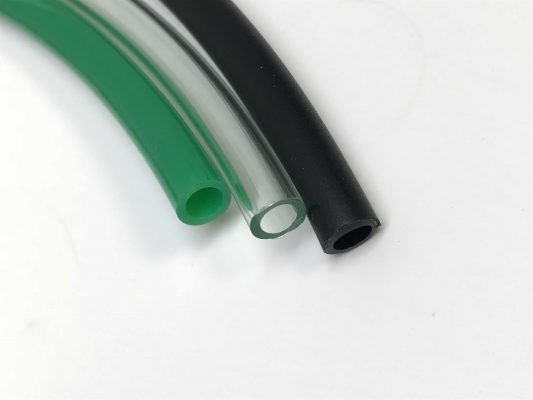
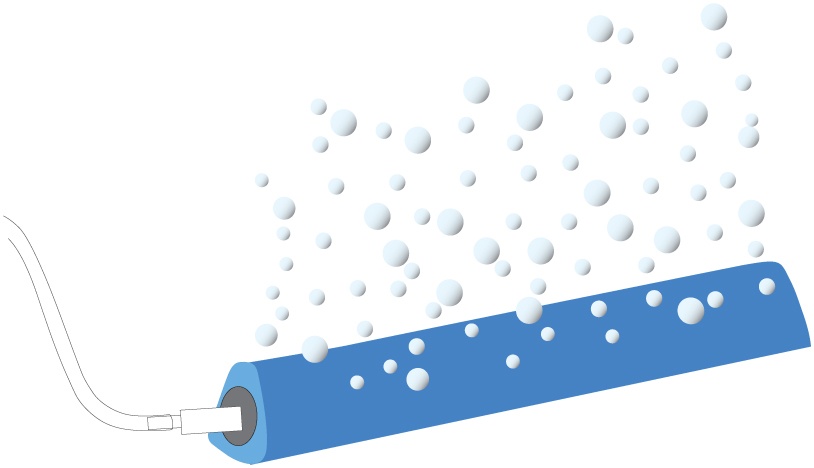
A small air pump should be used to power the internal filters and an optional airstone. An OxyMax 400 Air Pump or better yet a Hydra Aquatics Silent Giant air pump are the best choices. There are air pumps for must budgets that will work. Make sure and use an airline check valve to prevent the water from back siphoning if the air pump is placed below the water line. On more heavily loaded systems or when more than one fish is being treated, this small pump can power an addition internal box filter or sponge filter. An internal box filter is perfect for using seeded aqualife BioMatrix or other biological media that is seeded with bacteria from the main aquarium. This unit can be packed with floss for mechanical filtration, as well.
Note! Do not use carbon or chemical filtration in a quarantine tank. It will remove the medication.

Heater for the Quarantine Tank
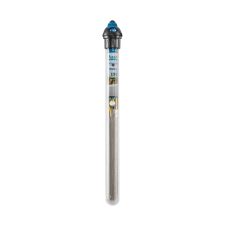
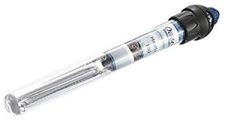
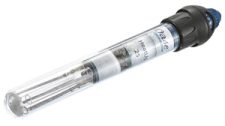
A good Heater is a must in the quarantine tank. Oase makes a good heater for this application. Buy a submersible heater you can easily adjust. Often quarantine tanks are run at elevated temperatures which help with some disease treatment. The tank should be kept at at least 78 degrees for treatment.

Decorations for a Quarantine Tank
Provide shelter for the fish but do not use gravel or calcium based rocks of any type. Nothing that calcium based should be used. Plastic ornaments, plants, ceramic ornaments and large pvc pipe fitting are the fine. Nothing that could absorb medication or be hard to clean should be used.
-
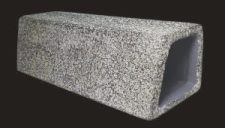 Pleco Spawning Cave – Stone Grey$13.22
 -
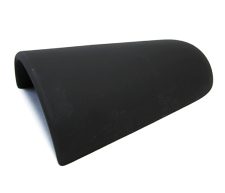 Half Cone Cave$11.54
Water Treatment, Conditioners, and Quarantine Best Practices
Water in the quarantine tank should be treated with aquaLife Complete unless copper is being used. If copper is being used use aquaLife Procondition to help reduce stress, make tap water safe, heal any wounds, and remove ammonia.
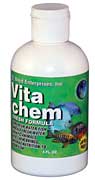
Vitamins and appetite stimulants added to the water are also important during quarantine and treatment. These additives help prevent nutritional deficiencies that often occur in sick species that are not eating properly. Hypergarlic and BioPro plus should be used in the aquarium and on the food.
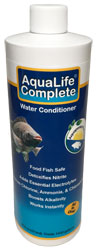
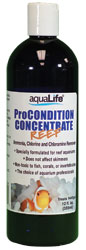

Other items that are helpful and needed.
A Thermometer is needed to make sure the temperature is correct in the tank and to make sure the water is at the right temperature when doing water changes.
Remember, always test ammonia and nitrite levels during treatment. If ammonia and nitrite levels increase, as is often the case when antibiotic medications are used, do water changes every other day to reduce their levels and re-medicate. Although it is usually easy to see when fish are stressed or the water is fouled, Seachem Ammonia alert will provide you with a quick visual to determine when the ammonia is high and the water needs to be changed and retreated.
Another quarantine method to consider for larger fish and saltwater
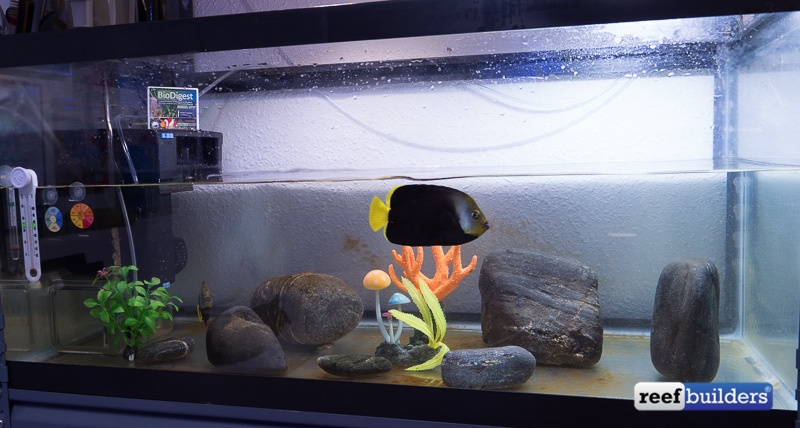
For another method we like, see how Jake Adams quarantines his saltwater fish in this post. This setup uses a Tidal filter internally and a standard aquarium with no lid. This would also work well with a larger rimless aquarium. Note the water level is kept low. That is ideal. It keeps fish in and saltwater spray from escaping as badly. Jake also uses a Seachem Ammonia alert and and Aquatop magnet thermometer. He mentions a bacteria product but we prefer Activate by aquaLife. Bacteria is not needed if antibiotics are being used. In addition, seeded BioMatrix works best. Take buy it from a local store or take some from an established aquarium and put it in the Tidal.
Go Back to Freshwater Disease Chart
Go to Saltwater Disease Diagnosis